The Ayurvedic Perspective on Massage
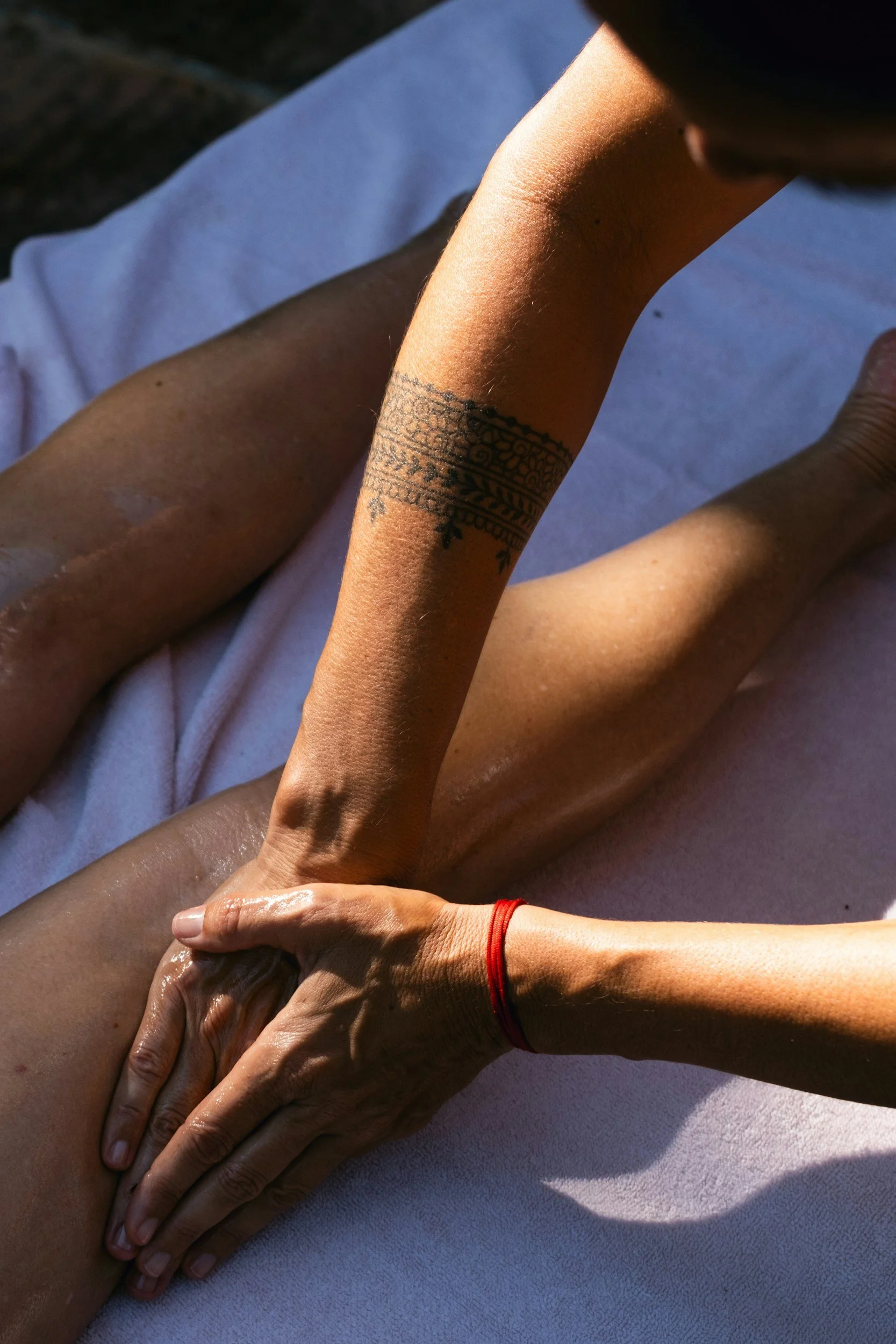
*This post is Part 3 of our series on massage therapy and healing touch. If you haven't already, please check out Part 1 here, Part 2 here, and Part 4 here!
In this edition, we'll take a look at the benefits of massage from an Ayurvedic viewpoint.
Massage Through the Lens of the Doshas
In [Part 2], I made mention of how good massage is for the regulation and coordination of vata's function, and I highlighted that, because nothing in the body moves or works without the work of vata. Vata, as one of the three doshas of the body, is responsible for the physiology of all movement and transport in every living thing. It's hard to overstate the importance and value of a modality like massage, with the power to regulate vata in such a direct, caring manner.
But massage actually yields many benefits for the other two doshas of the body (pitta and kapha) and both of the doshas of the mind (rajas and tamas), as well.
How can that be, when each dosha is so different?
Pitta represents the fiery physiology of digestion, metabolism, and pigmentation. Kapha represents the earthy physiology of structure, lubrication, and defense.
Rajas is the principle of unending mental and thought momentum. Tamas is the principle of inertia, and tamas presents itself as feeling stuck, unmoving, and nihilistic.
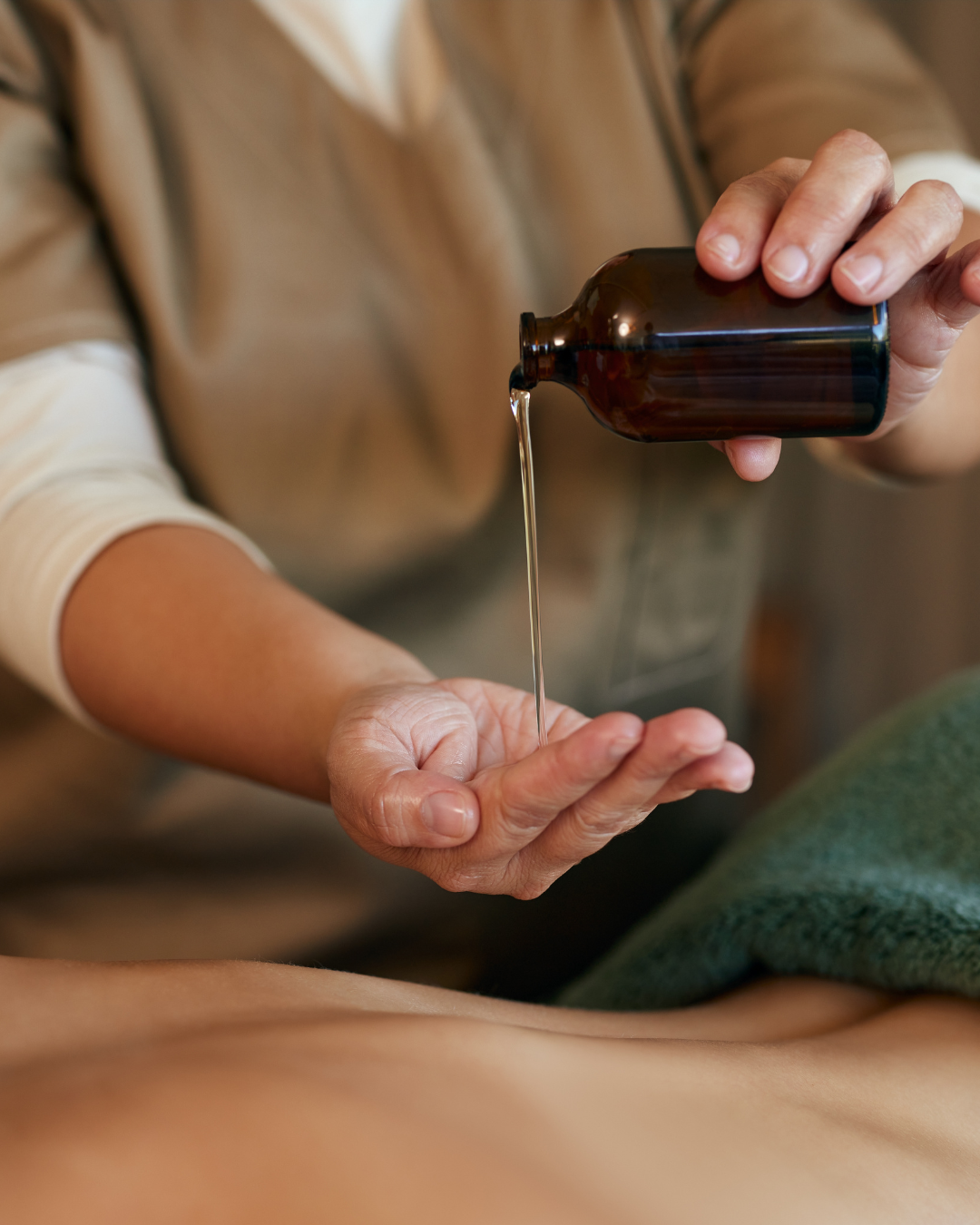
Just like with everything else in Ayurvedic medicine, to best care for each form of doshic imbalance, we need to customize and personalize. This means that for each person, every massage experience should be optimized to the needs of that person in that moment. Generally, in practice, this also means that we have to attend to the qualities that are opposite to those present in excess. If there is a great deal of dysregulated vata, touch will need to be grounded, warming, and nurturing, with light or moderate pressure, and oil to soothe dry tissues and provide structure. These qualities nicely combat the mobile, cold, and dry nature of vata.
If pitta is aggravated, secure, moderate pressure with calming massage strokes and targeted tissue-release techniques is often best. This ensures that the heat, sharpness, and intensity of pitta are soothed.
When kapha is accumulating, robust pressure and brisk strokes with mobilizing stretches and energizing techniques will often fit well. This prevents further heaviness from developing, warms the coolness of kapha, and opens channels plugged with excessive mucus and oily, solid secretions.
Rajas can be calmed with mindful and breath-forward massage techniques. On the other hand, tamas will respond well to active, stimulating massage methods.
Massage as Part of Dinacharya (Daily Routine)
Massage is powerful enough, even in limited forms, to impact health in a significant way. When woven into one's daily routines and rhythms (dinacharya), those benefits are amplified.
This is why the plans of care I give my patients commonly include some form of daily self-massage. Padabhyanga, a warm oil-based massage of the ankles and feet, is a common element of care, with oils mixed and matched in different ways to meet the needs of each patient. The targeted massage of particular marma points (see below) is also a frequent element.
These self-treatment techniques, though not quite as powerful as a well-performed professional massage, are still exceptionally powerful - impactful enough to work both as prevention and partial treatment for a wide variety of health concerns. And when daily self-massage is coupled with some regular professional massage and healing touch rhythm, the effects and benefits compound, and a sustained rhythm of self-care develops.
As an aside, we share more on daily self-massage in our Essentials of Ayurvedic Daily Living: Dinacharya course.
The Role of Marma Points in Massage Therapy
The last piece of the puzzle we'll discuss here for now is marma chikitsa - the care of the individual through marma points.
Marma points have a number of different overlapping definitions, but the simplest one is that they are pressure points that help us to access the magic of the body's function and physiology directly and gracefully.
Marma chikitsa is effectively Ayurvedic acupressure; select pressure points treated in thoughtful ways for specific medicinal benefit.
The Ayurvedic system of marma point care and treatment is thousands of years old. In my opinion, it is actually widely underutilized in Ayurveda today. However, I have observed that elements of that system have woven their way into modern massage therapies. I often see (and experience) massage therapists hanging out for a bit at a key marma point and giving it extra care, without even knowing that it is a pressure point that has been used in treatment for so long. And that makes sense, because Ayurveda was one of the most significant influences on Ancient Greek (Unani) medicine, and Unani medicine was perhaps the biggest direct influence on modern western medicine and western healing traditions.
At The Buddha's Medicine, our LMTs are trained to recognize and make intentional use of marma points in their work, weaving the ancient wisdom of Ayurvedic healing touch into contemporary, blended techniques.
We've got one more installment in this series for you. In that one, we'll share some practical information for folks who are considering coming to work with our wonderful massage therapy team. And if you're ready to dive in, you can get scheduled now!
If you or someone you love could benefit from skilled, tradition-informed healing touch to support recovery, ease tension, or simply restore a sense of well-being, we're here to help.
Professional disclaimer: please do not initiate any herbal or other medicinal interventions without the guidance of a knowledgeable provider.

Dr. Matt Van Auken, MD, MPH
Dr. Matt is an Ayurveda-trained, triple board-certified physician.